Welcome to “MAST Wrapped 2025”! This post will present some highlights and statistics from this year at MAST.
Chapter 1: Data
Total Number of Files in MAST
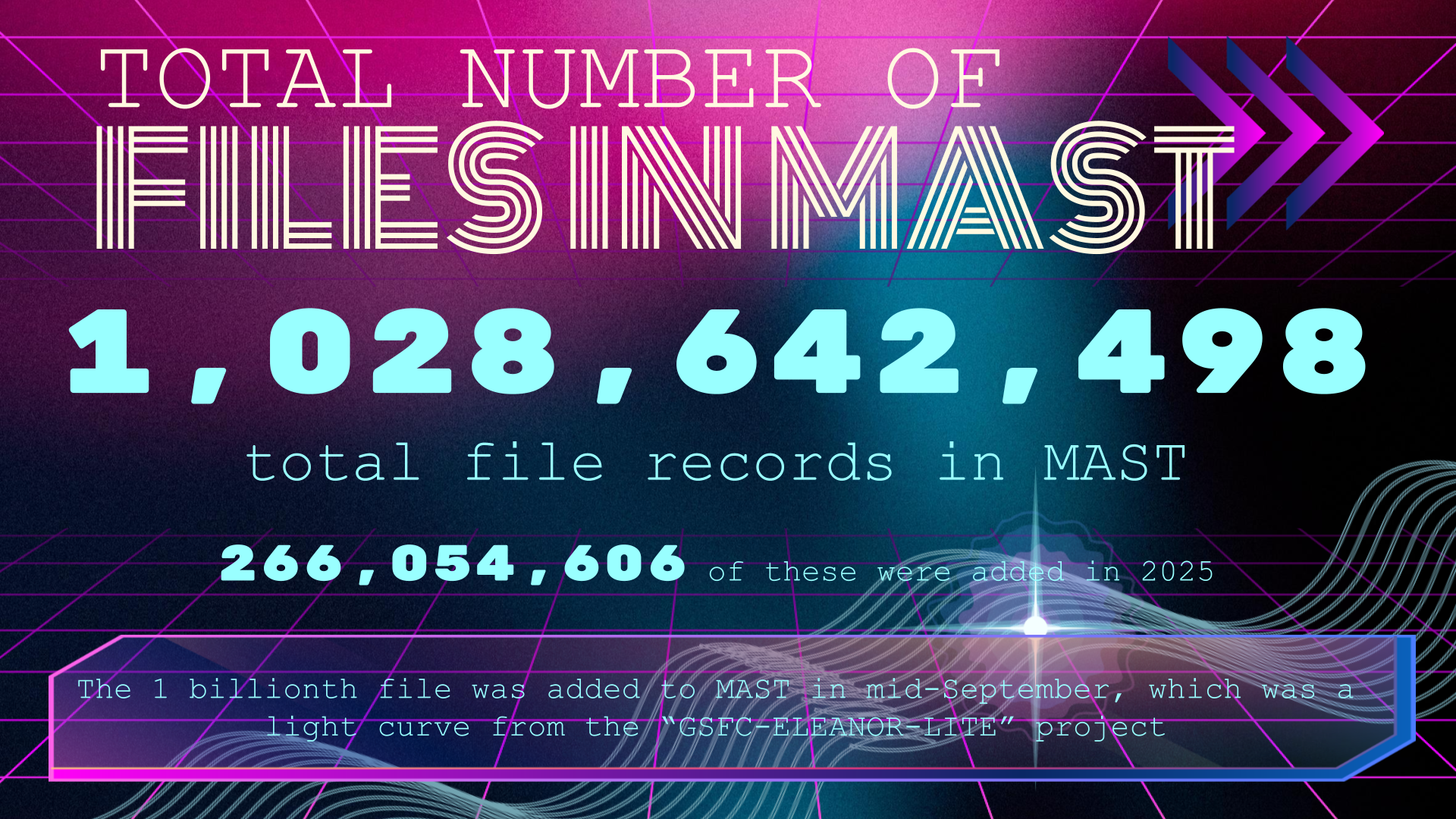
This year, MAST surpassed 1 BILLION FILES! This covers over 356,276,560 unique observations from 96 different telescopes - both in space (like HST and JWST) and on the Earth.
New Data Added
MAST is growing VERY quickly: of those 1 billion files, 266 million of them were added in 2025! That’s over 1.9 Petabytes of data. This number will only keep increasing: the Roman Space Telescope will add so much more when it launches next year!
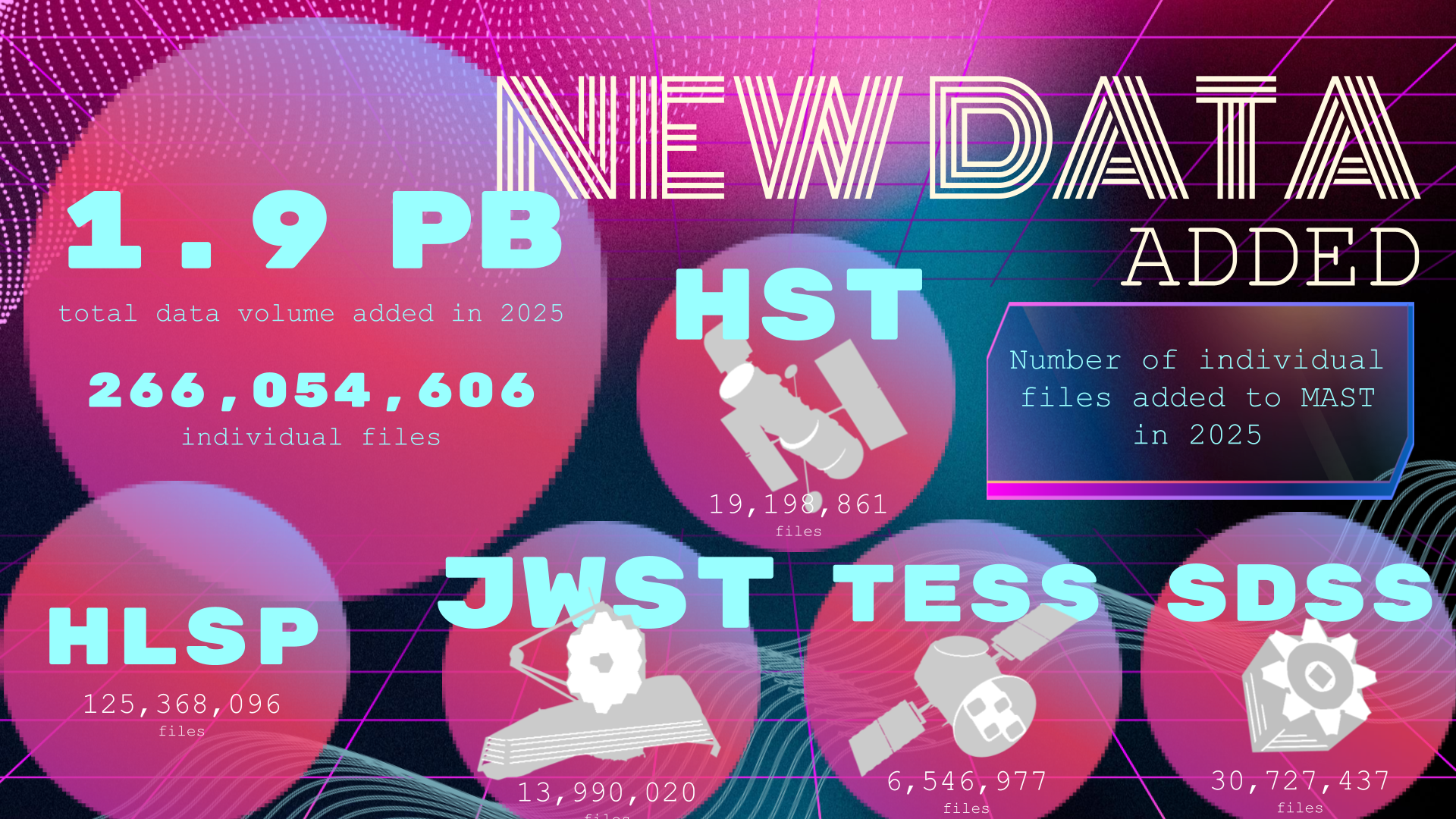
That’s a lot of new data! We can also break it down by individual mission. The Hubble Space Telescope (HST) and James Webb Space Telescope (JWST) are among the most popular telescopes, and each delivered millions of new files this year.
Longest Exposure Times
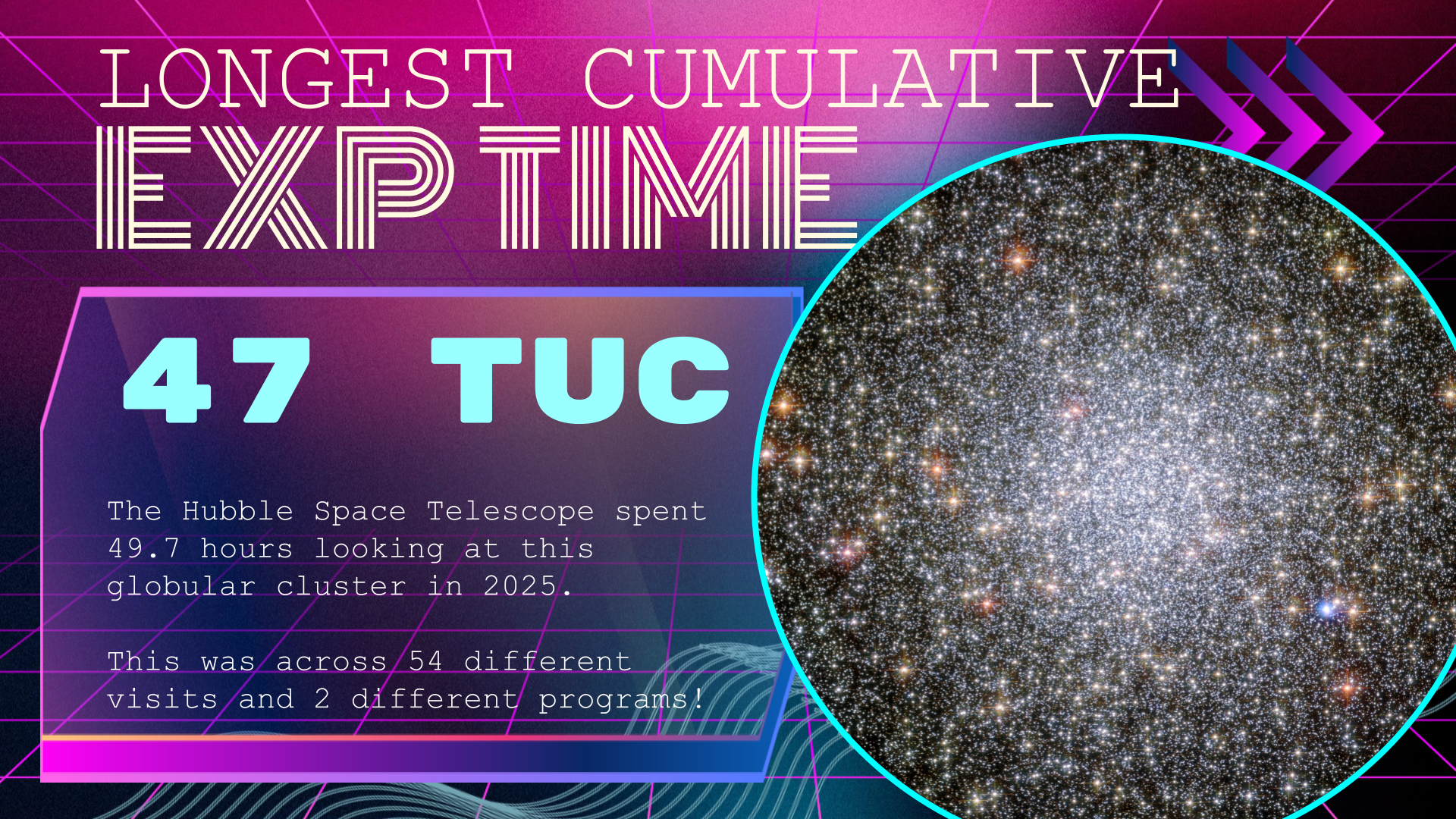
Want to know what HST and JWST spent the most time looking at this year? The longest cumulative exposure time for HST goes to a globular cluster, named 47 TUC:
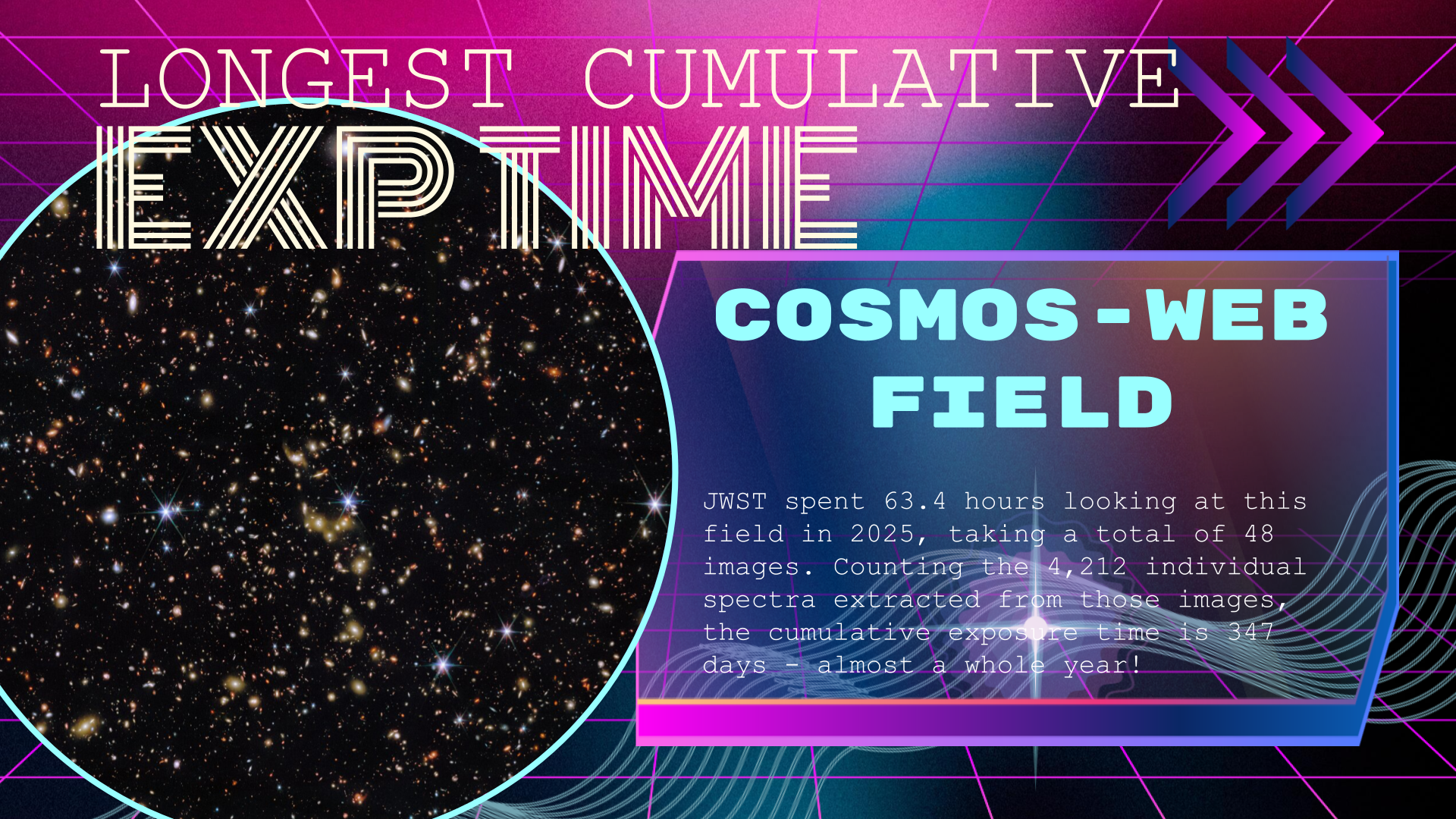
And for JWST, the winner is the COSMOS-WEB field!
Legacy Missions
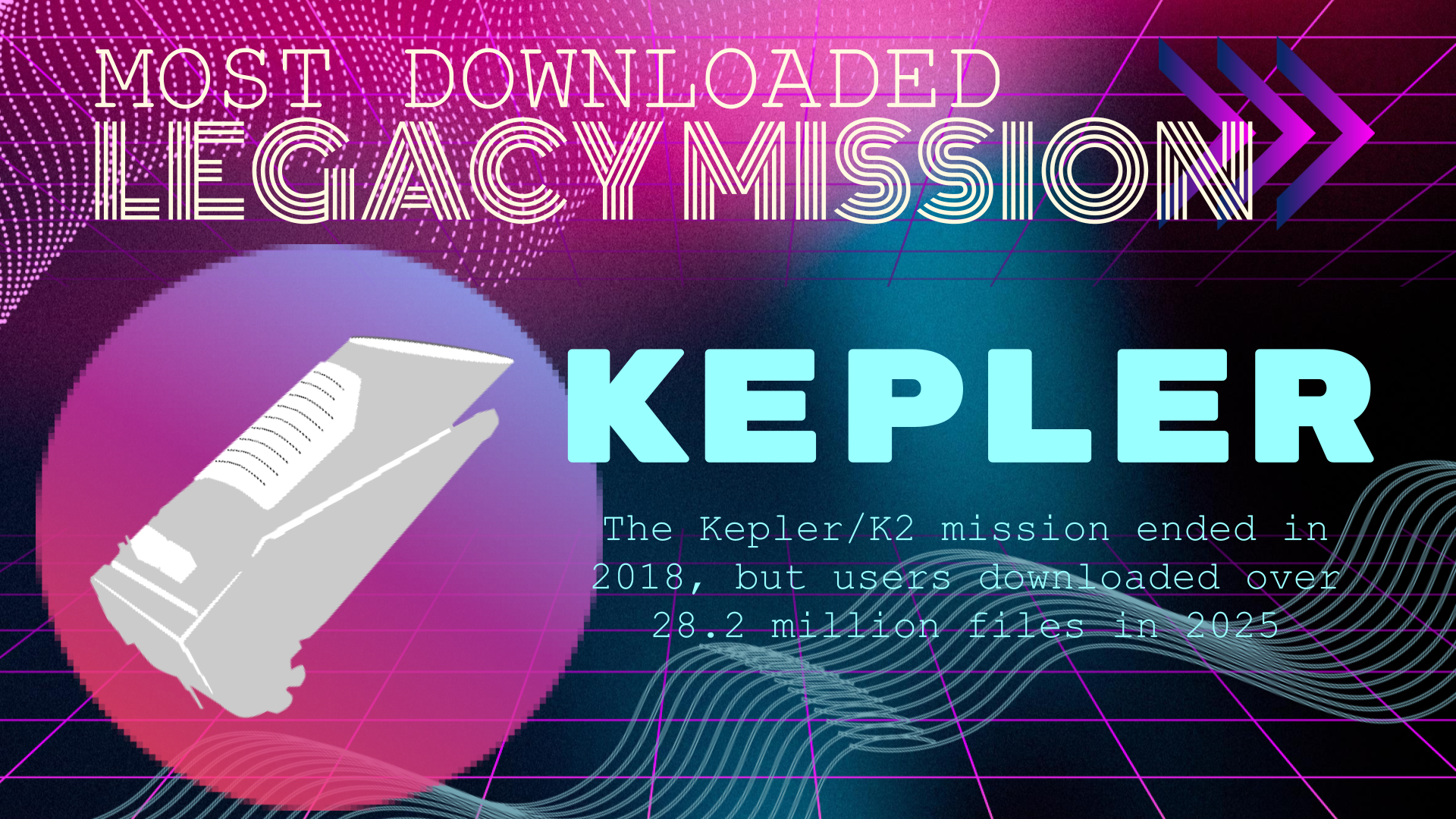
HST and JWST are only 2 of the 23+ missions that MAST contains data from. One legacy mission of note is Kepler! Kepler hasn’t observed any new data since 2018, but it’s still very popular: over 28.2 million Kepler files were downloaded this year!
Chapter 2: Downloads
Total Number of Data Downloads
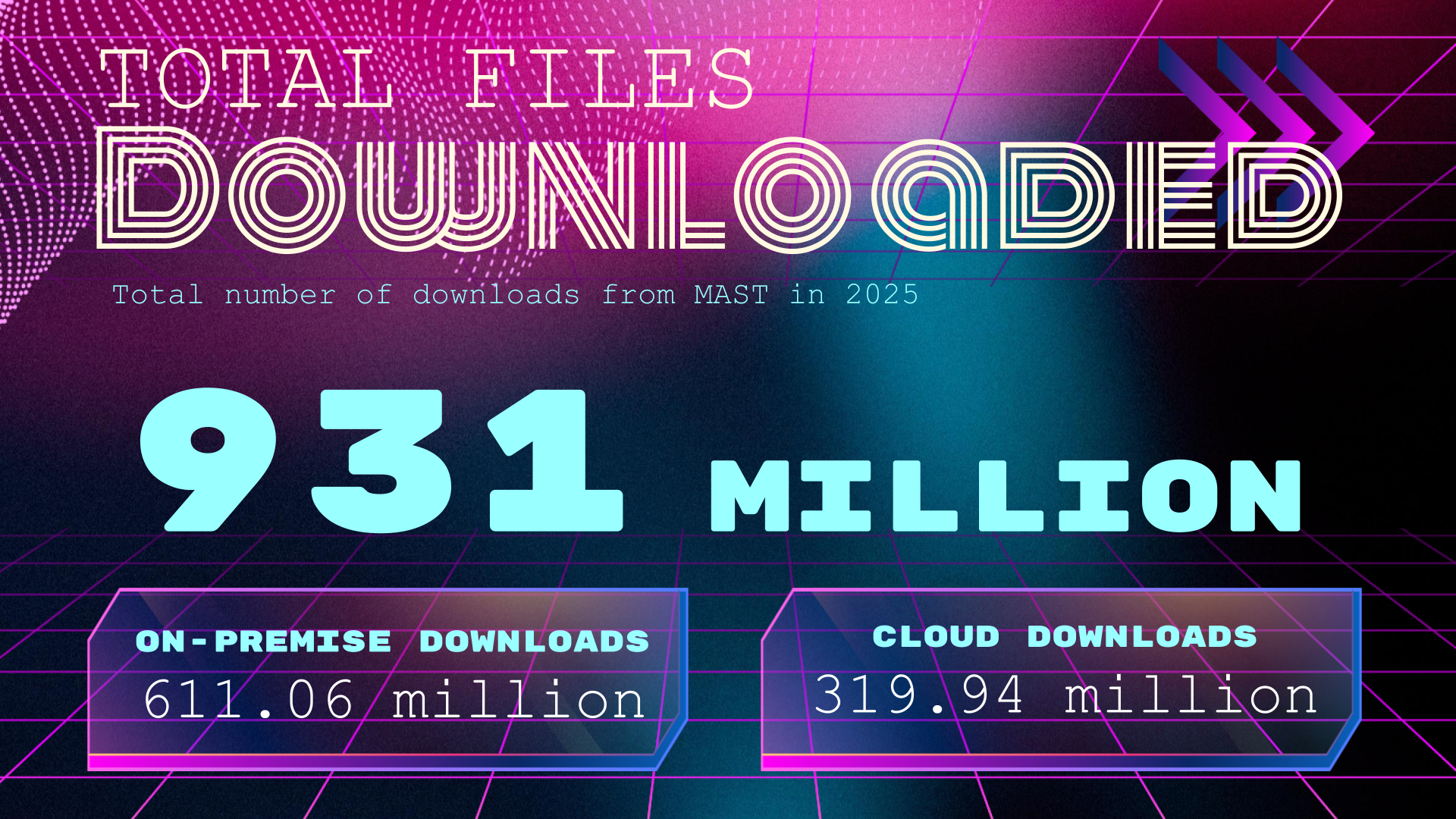
Where is all that data going? In 2025, over 931 million files were downloaded from MAST:
Number of Countries Reached
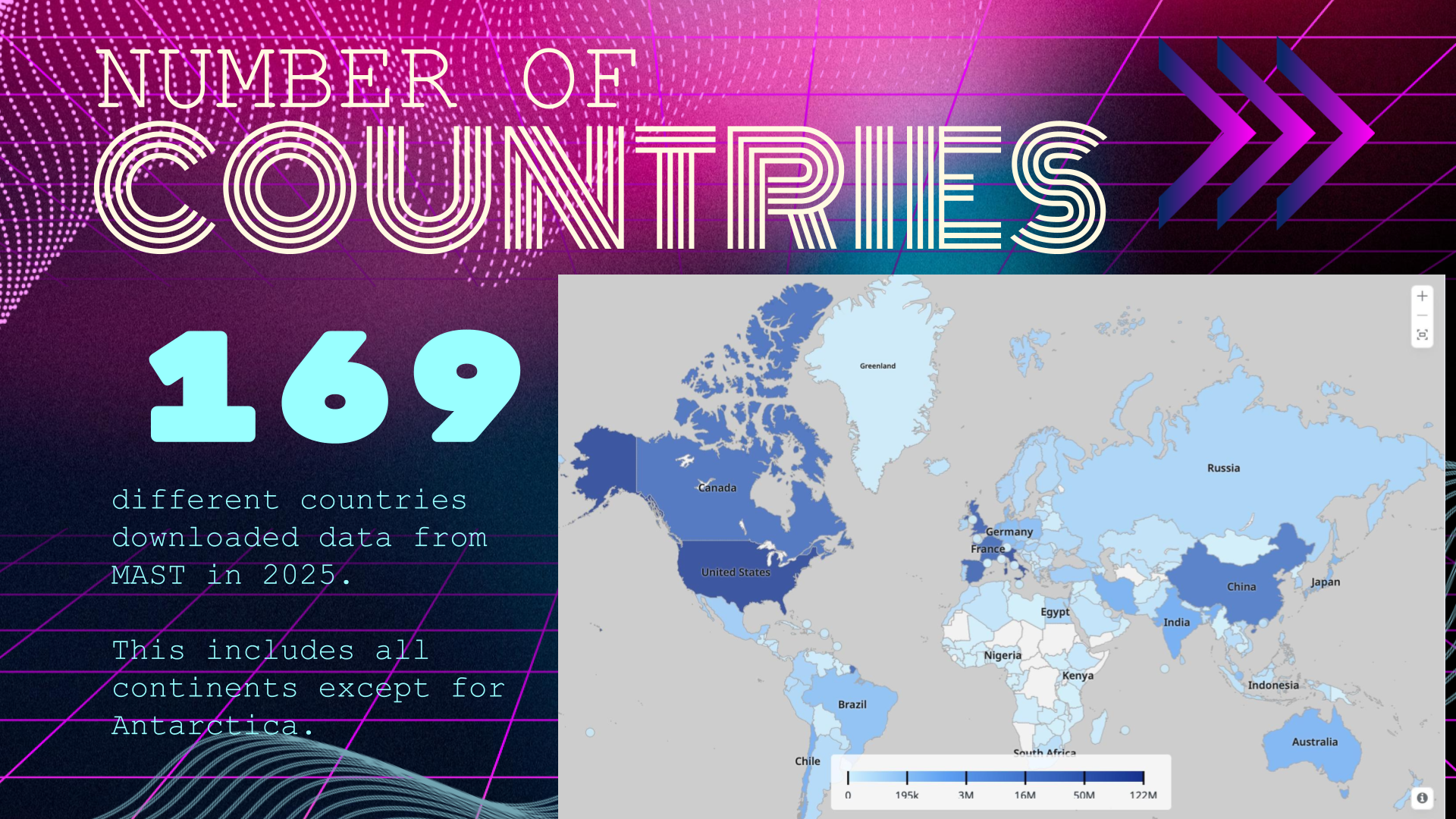
Scientists from all around the world access MAST data! This year, data was downloaded to 169 different countries:
Top 5 Cities
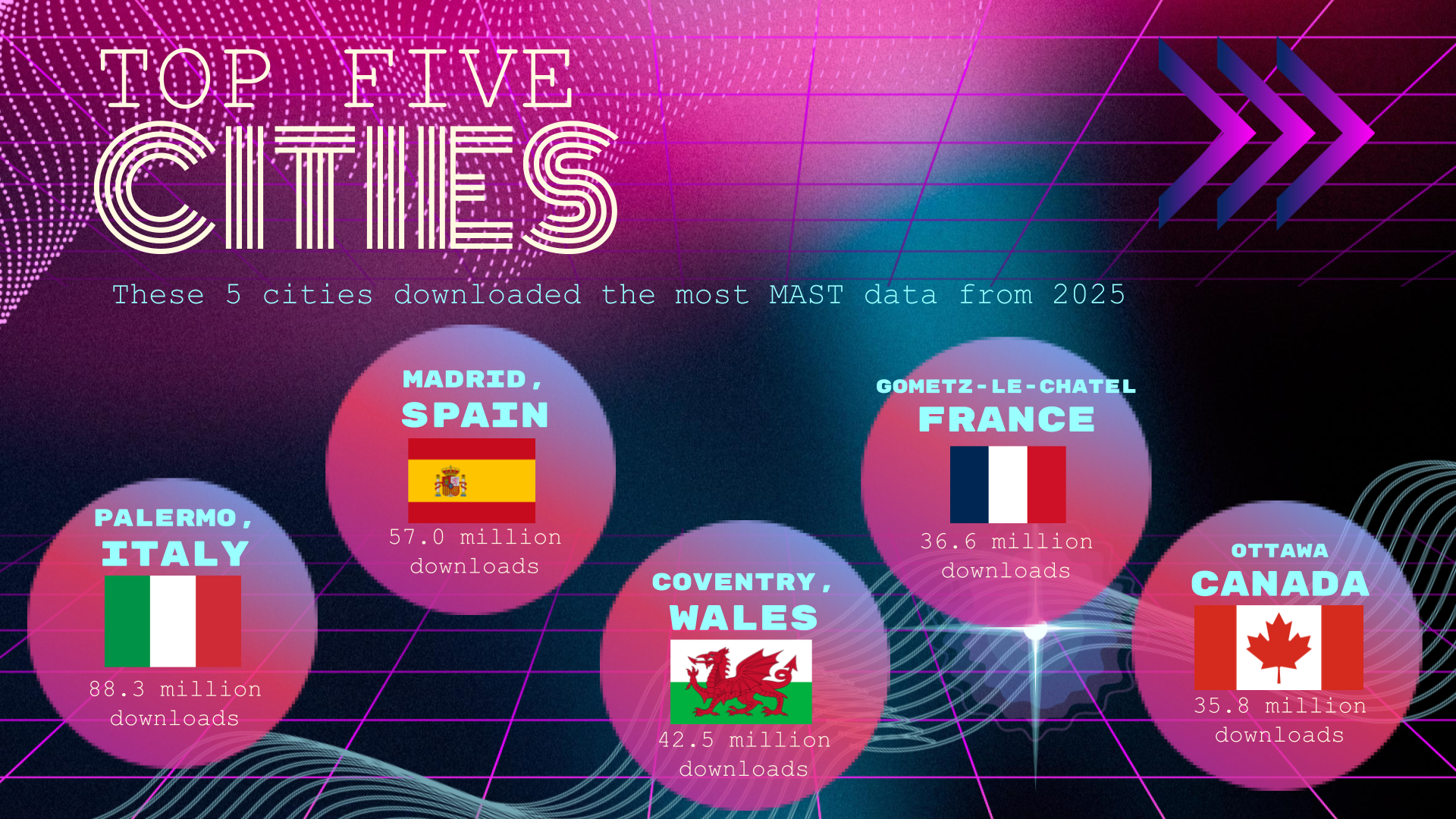
Out of those 169 countries, these were the top 5 cities globally who were interested in MAST Data:
Busiest Day of the Year
The busiest day of the year for MAST was February 26. Over 9.11 million files were downloaded on that day. Why Febuary 26? We have no idea.

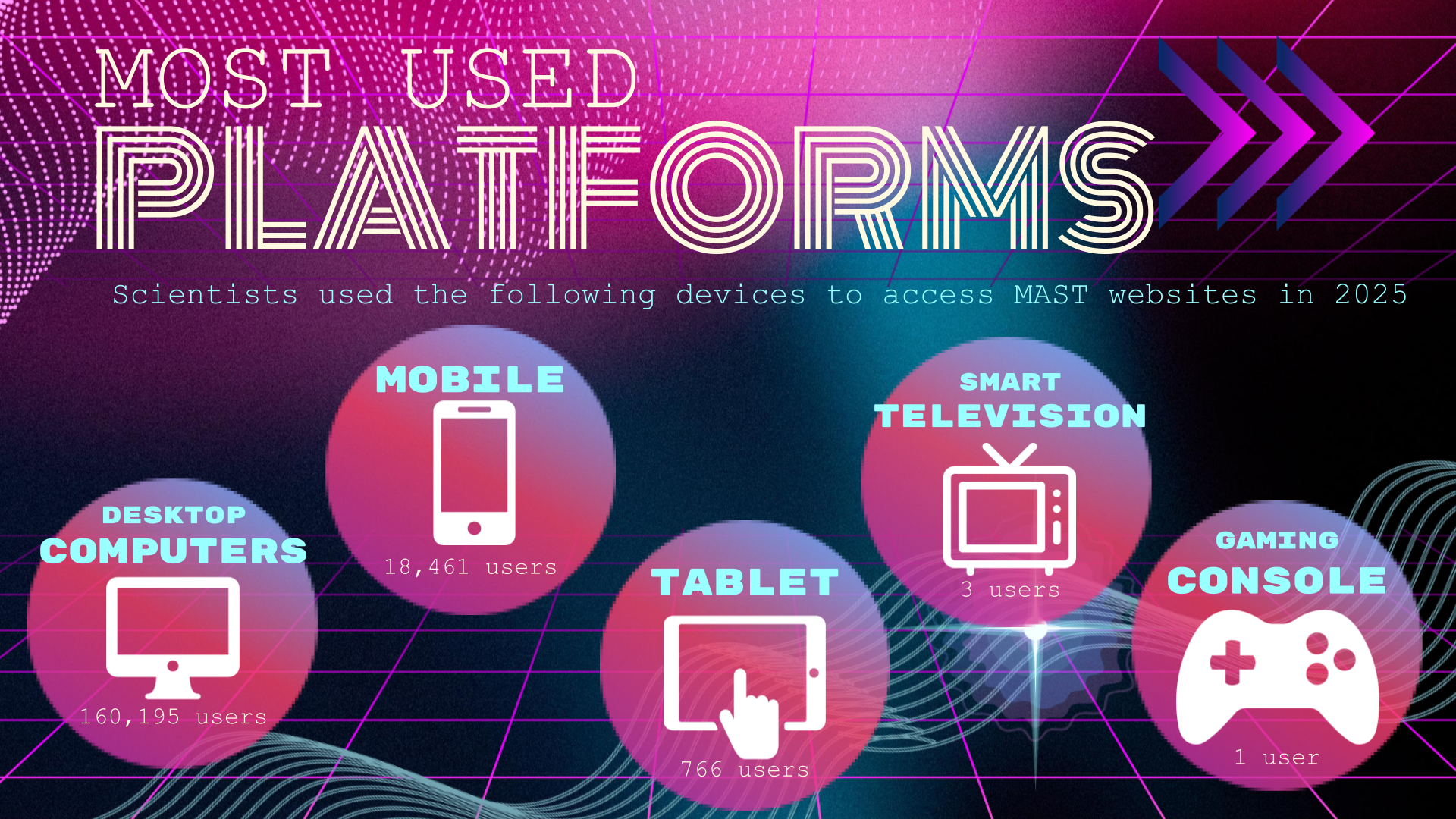
Different Devices
What kinds of devides are people using to access MAST? The answer might surprise you, because it’s not just limited to computers!
Credits:
- This research is based on data obtained from the the MAST data archive at the Space Telescope Science Institute, which is operated by the Association of Universities for Research in Astronomy, Inc., under NASA contract NAS 5–26555.
- The graphics for this post were generated using a presentation template from SlidesCarnival.
Written by: MAST Staff
MAST
We are the Barbara A. Mikulski Archive for Space Telescopes! Primarily focused on the optical, ultraviolet, and near-infrared, we host data from Hubble, JWST, and over two dozen other missions.